You’ll need the GoVeda MCP server connected first. It takes about a minute. See Connect to Claude or ChatGPT to set it up. Once it’s connected, just ask your question; your assistant reaches for GoVeda on its own when a patent task needs it. New accounts get a 14-day free trial with 10,000 credits.
Who actually owns a patent, and who owned it before? Ownership moves through assignments, acquisitions, and name changes. GoVeda reconstructs the chain from the assignment record.
The prompt
Open a new chat and paste:
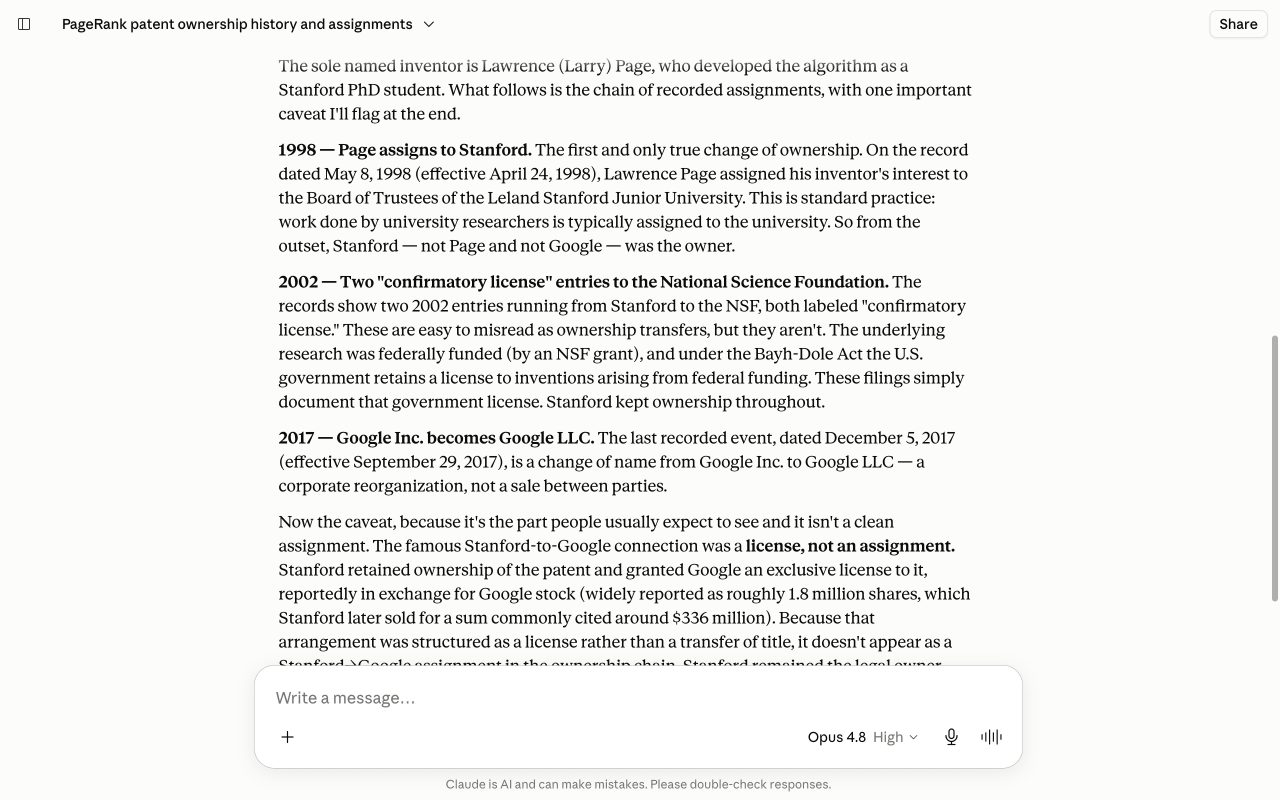
Trace the complete ownership history of patent US-6285999-B1 (Google’s PageRank patent). Who originally filed it, and how did ownership change hands over the years? Walk me through the chain of assignments.
What you get
GoVeda pulls the transfer history and walks you through it in order. For the PageRank patent that’s a clean story: the inventor assigned it to Stanford, there are confirmatory licenses on record, and Google Inc. later became Google LLC. The sharp part is what the records don’t show. GoVeda points out there is no recorded sale from Stanford to Google, because Stanford licensed the patent rather than selling it, which is why the current-assignee field lists both Google and Stanford: Google through its license interest, Stanford as the originating owner.
Tips
Run this on any patent before you rely on who owns it. The chain combines USPTO reassignment records and transfer events from other authorities into one timeline. An empty result means no transfer was recorded, which usually means the original owner still holds it (or the patent has since lapsed or expired). Recorded assignments can be incomplete or lag reality, so confirm chain of title against official records before relying on it for a transaction.
Next: browse more use cases or read the MCP tool reference.