You’ll need the GoVeda MCP server connected first. It takes about a minute. See Connect to Claude or ChatGPT to set it up. Once it’s connected, just ask your question; your assistant reaches for GoVeda on its own when a patent task needs it. New accounts get a 14-day free trial with 10,000 credits.
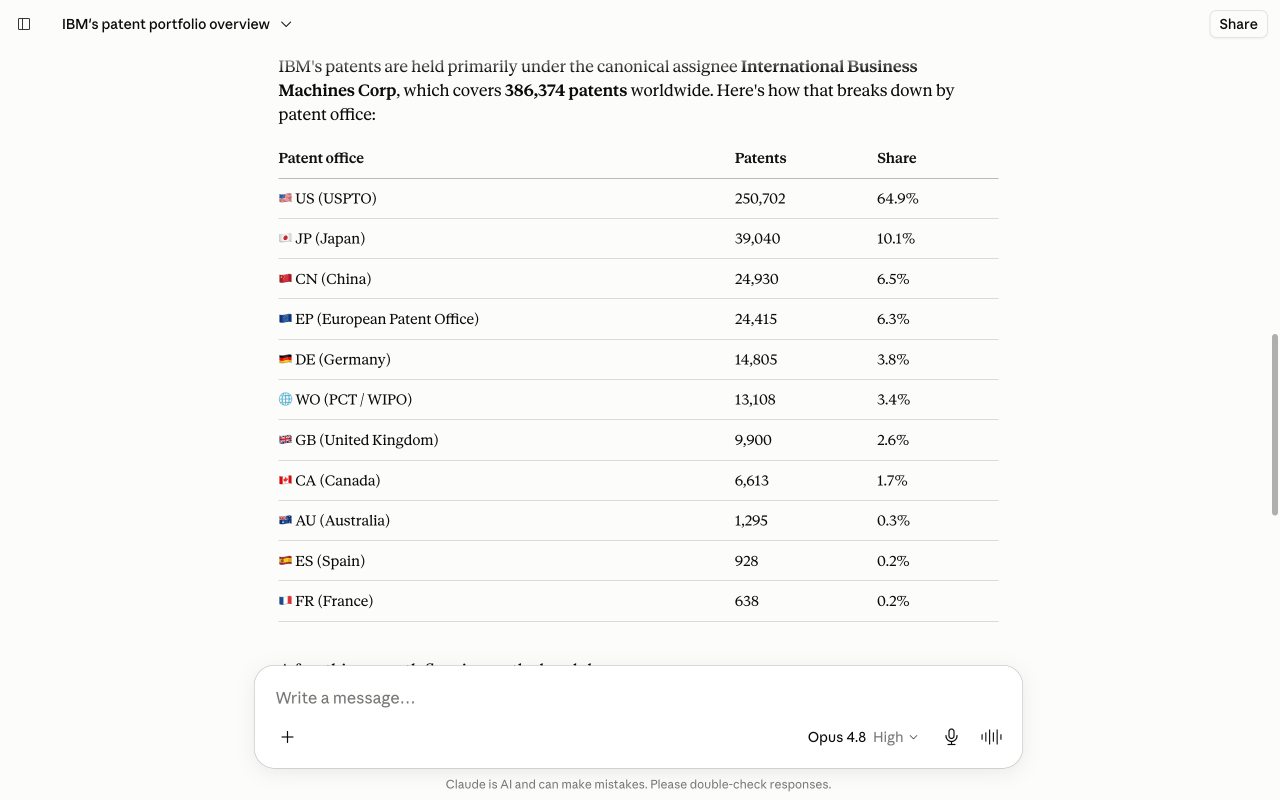
How big is a company’s patent footprint, and where does it file? Name the company and GoVeda gives you exact counts, not a web estimate.
The prompt
Open a new chat and paste:
Give me an overview of IBM’s patent portfolio. How many patents does IBM hold, broken down by patent office? Then show me a sample of their most recent filings so I can see what they’re working on lately.
What GoVeda does behind the scenes
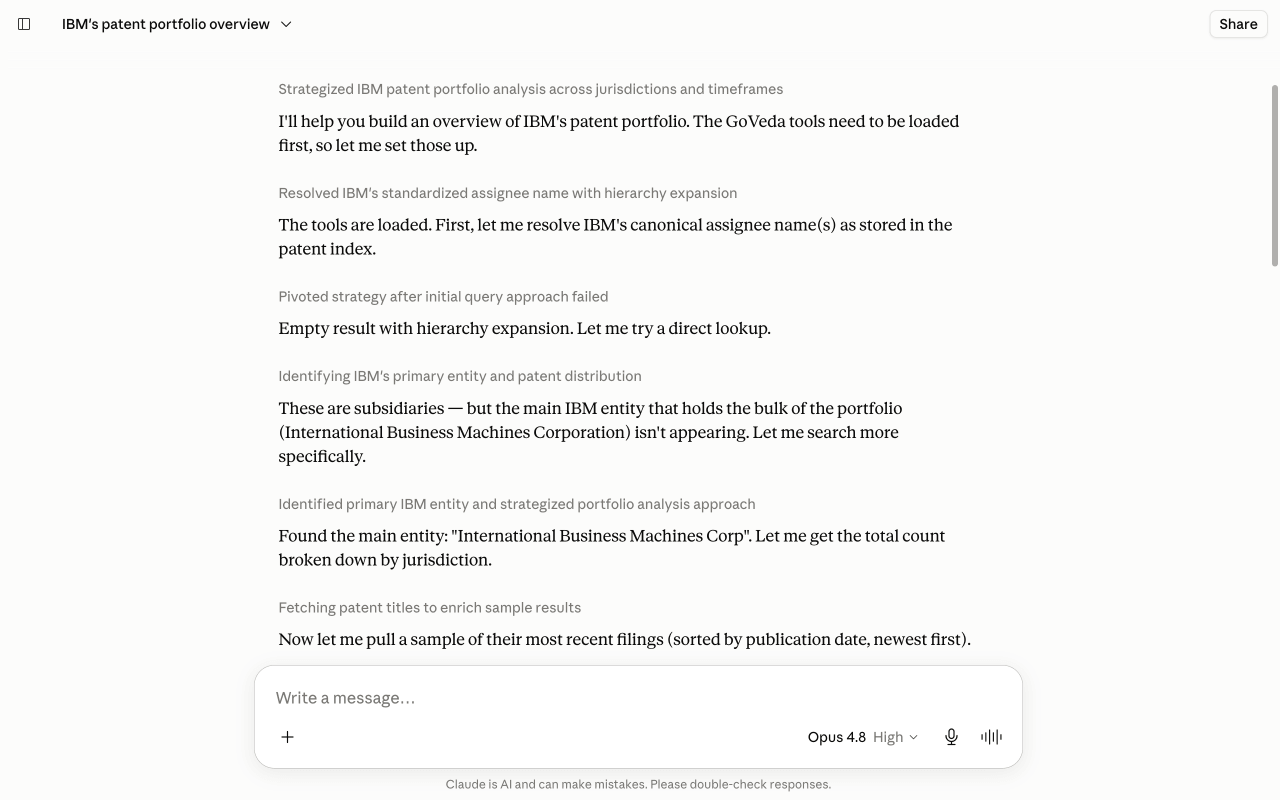
A company name isn’t a clean key into patent data, so the assistant resolves it first and then builds the overview in layers:
Resolve the company name
It calls lookup_party to turn “IBM” into the exact assignee name stored on patent records, so the count captures the right entity instead of a near-miss spelling.
Count the portfolio by jurisdiction
It uses party_count with a per-authority breakdown, which returns a real total and each office’s share rather than a web estimate.
Pull the most recent filings
It calls party_patents to page the newest patents, so you can see what the company is working on lately.
Read the titles
It runs batch_get_patents on that sample to fetch the titles, turning a list of numbers into something you can actually skim.
You can watch the whole chain happen in the chat:
What you get
You get a real count broken down by patent office, often as a table with each jurisdiction’s share, followed by a sample of the most recent filings. GoVeda reads the numbers honestly: it explains that “WO” is a PCT staging route rather than a country, and notes the count covers the main corporate entity, not every national subsidiary.
Tips
Swap in any company. You can narrow the view with filters: only living patents, only a date range, or only a classification area. To cover a whole corporate group, ask GoVeda to include subsidiaries when it resolves the name.
Next: browse more use cases or read the MCP tool reference.